DIY Hydroponic Herb Garden from Recycled Containers: A Kratky Method Guide
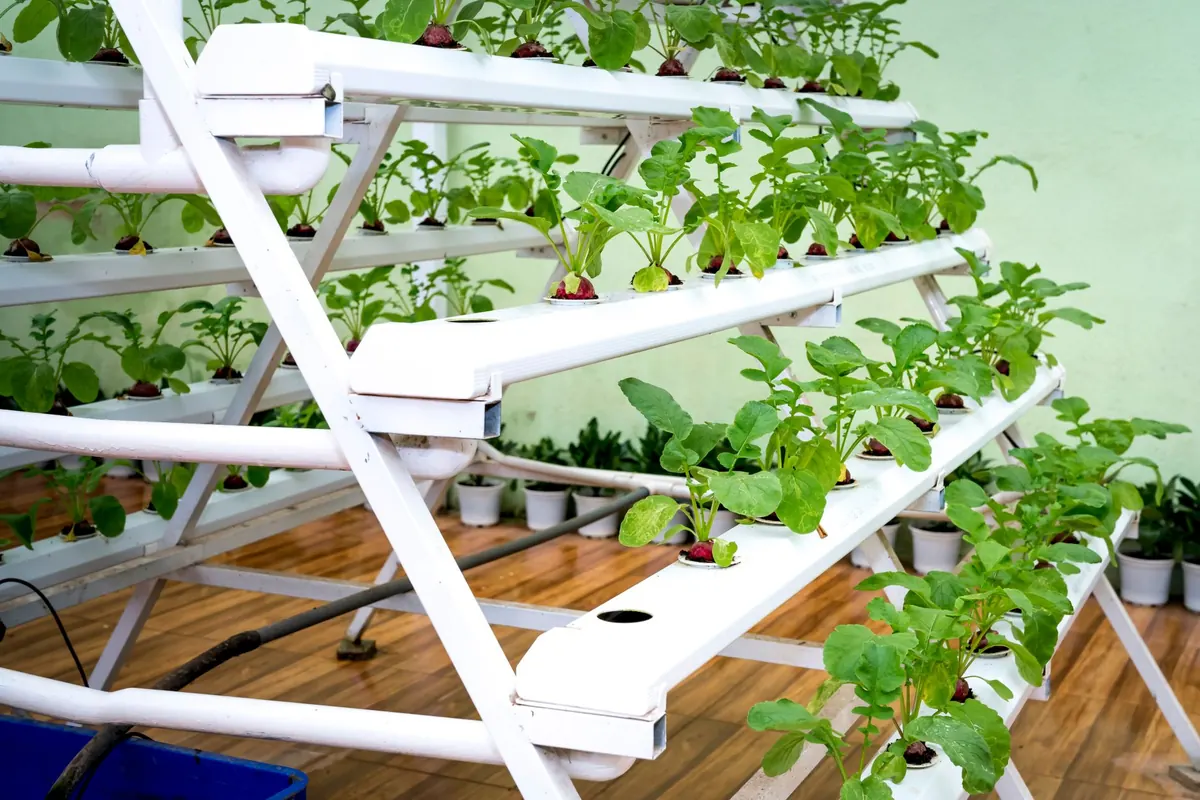
Passive hydroponics sounds like a contradiction: growing plants in water without pumps, timers or air stones. That is exactly what the Kratky method does. A jar of nutrient solution, a net pot, and a herb content to sit with its roots half in water and half in air. Basil, mint and parsley take to it well, and most of the kit can come out of your recycling bin rather than a garden centre. Here is how to put one together.
Roots need two things at once: water and oxygen. In soil they get both because the gaps between particles hold air. In a sealed jar of water they would eventually suffocate.
Kratky solves this by letting the level drop. You fill the jar once, plant into the net pot so the roots dangle into the solution, and then leave it alone. As the plant drinks, the water line falls and a pocket of humid air opens up beneath the pot. The upper roots live in that air; the lower roots stay submerged and take up water and nutrients. Nothing needs plugging in.
The one rule that matters is not topping the jar back to the brim every time you walk past it, because that drowns the air roots. Once plants are established, aim to keep roughly the top third of the root mass in air and the rest in solution.
pH and EC meters are genuinely useful once you are running several jars, but they are not required for a first attempt. Start without them and see how you get on.
Light in the reservoir means algae, and algae means a green, sour-smelling mess competing with your herbs. If you are reusing a clear glass jar, wrap it in kraft paper, a strip of card or two coats of exterior paint. Tape works too, though it peels in a steamy kitchen.
Wash everything with hot soapy water and rinse thoroughly. A two-litre drinks bottle can be cut in two: the base becomes the reservoir and the top half, inverted, holds the net pot in its neck. Tins work as well, but run a strip of tape around the cut rim and be careful when you clean them.
The quickest route is a cutting. Snip a stem just below a leaf node, strip the lower leaves and stand it in a glass of water on the windowsill. Roots appear within a week or two. Move it into the net pot when they are a few centimetres long. From seed, basil germinates in about a week at room temperature; sow onto damp kitchen paper or straight into a damp plug.
Mint is the easiest of the three and roots from cuttings in water in about a week. Give it its own jar: it spreads aggressively and will crowd out anything sharing its solution. It also grows tall and leggy indoors, so pinch the tips often to keep it bushy.
The slow one. Parsley can take two to four weeks to germinate, so start it well before you want a crop. It forms a taproot, which resents disturbance, so raise it in a plug and set the whole plug into the net pot rather than bare-rooting the seedling. Flat-leaf types are quicker and more forgiving than curly ones.
Whichever route you take, set the stem at the same depth it grew at before, and tuck clay pebbles around the base to hold the plant upright.
Follow the bottle. Manufacturers usually dose for mature plants, so mix at about half strength for seedlings and increase once you see two or three sets of true leaves. Most leafy herbs are happy somewhere between pH 5.5 and 6.5. If your tap water is very hard, rainwater is often easier to work with.
Fill the jar until the solution just touches the base of the net pot, leaving a centimetre or two submerged. Mark that level with a pen or a strip of tape. The mark is a ceiling, not a target.
Check the level every two or three days in summer. A thirsty basil in a litre jar drinks more than you would expect. Top up to the mark with dilute nutrient rather than plain water, otherwise you gradually weaken the feed. Every two to three weeks, tip everything out, rinse the jar and roots, and mix a fresh batch. Stale solution and salt build-up cause more failures than underfeeding.
Once one jar is working, the temptation is to fill the whole windowsill. Do it in stages instead. Sow or take cuttings two or three weeks apart so you always have a jar coming into production, and keep the herbs in the brightest spot you have — a south-facing windowsill gives six hours or more in summer, which is what basil in particular wants.
Harvest by pinching basil tips just above a pair of leaves to encourage branching. Cut mint regularly rather than letting it run to flower, and take parsley stems from the outside of the plant at the base. Through winter, growth slows and the same plants need less water and weaker feed; expect less and treat the jars as a holding operation until the light returns in spring.
Start with one jar, one herb, and a marker pen line. Get the fill level right and the rest follows easily.
Photo: Quang Nguyen Vinh / Pexels
Previous Post
Comparing Peat-Free Composts for Seed Sowing: Coir, Bark and Wood Fibre
Next Post
Do Houseplants Grow Better with Coffee Grounds? A Simple Controlled Experiment